An art fair inside twelve apartments
The first edition of AL Hueso Feria de Arte ran from Friday, October 30 to Sunday, November 1 in a building in Chacarita, in the city of Buenos Aires. According to Clarín, the initiative of gallery owner and cultural manager Solange Guez received more than 4,500 people over its three days. The paper called it the great revelation of Art Week.
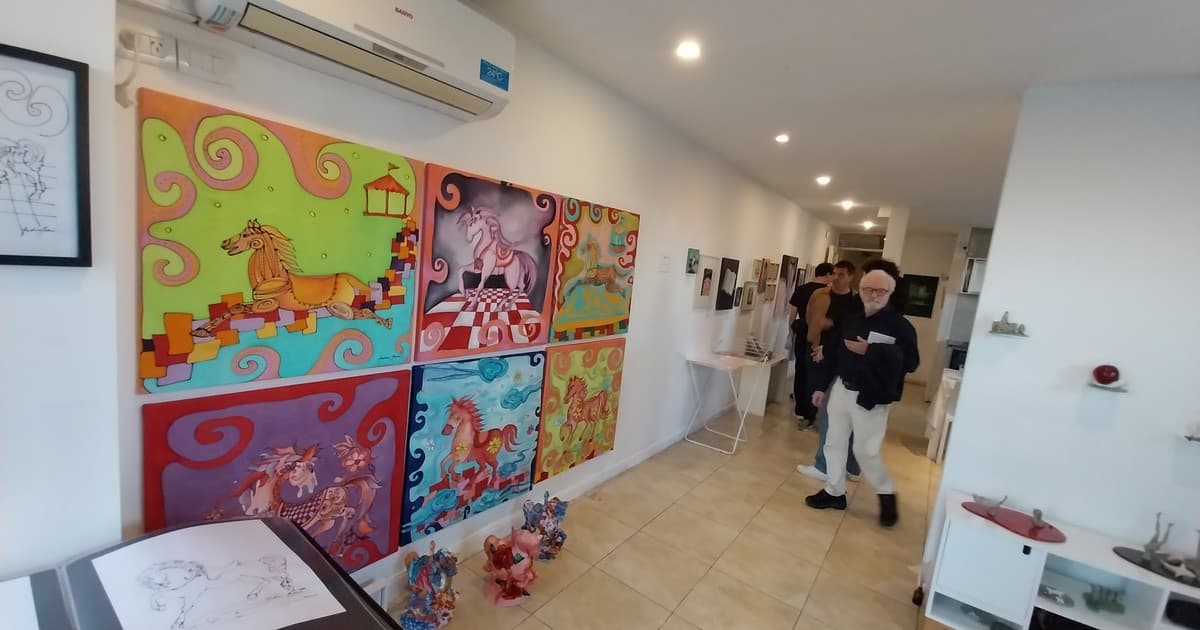
Instead of setting up booths in a hall, the fair used the short-term rental apartments of a complex known as Tacha. There were twelve units spread over four floors and 1,100 square meters, and each one worked as an exhibition room. The gallery owners and project managers stayed in those same apartments while the fair lasted.
The project took place alongside arteba and AFFAIR, two other events of the same week. Clarín describes it as a house-takeover style project that takes a risk in an Argentine art world that keeps reinventing itself. Artists, gallery owners, curators and managers from different backgrounds gathered in the building.
Who took part and what visitors took home
There were 28 galleries and artist collectives. From Buenos Aires came projects such as Autoras en Tienda and the Colectivo Artístico Feminista con Vos Voz. Córdoba was represented by Tres Salas and Tucumán by Estudio Maleza, and there was also an international presence from Spain, Uruguay and Chile.
Among the names on the participant list are Casazul, Belle Arti, Ciudades Extraordinarias, Hilo Azul, Phuyu Proyectos Expositivos, Cassia House, Julia Baitalá, Oíd el Vidrio, Fracasa Mejor and La Inversa. Each one took its own apartment inside the building.
With the entry ticket, every visitor received a fanzine called Al Hueso, which detailed the works at the fair. It came with a collectible ceramic piece shaped like a bone, made by artist Mara Riviello López, who also took part in the event.
The balance of the first edition
Guez spoke with Clarín on Sunday afternoon, the closing day. She said the fair “far exceeded my expectations in every way”, both for the links that formed among the projects and for the response from the public and the art world.
On sales, she said the level reached surprised her: in almost every space the projects were able to recover what they had invested, something she considered central. That, she explained, helps art circulate and makes new editions possible.
The ground floor had its own cultural program. Screenings, talks, performances, book presentations and music followed one another. One floor up, on the first, a section was devoted to art publishers, artist books and printed work.
Guez said the fair has already settled among the three active ones of the city's Art Week and that she will try to build on it next year. She also explained that it could be activated at any time of the year, because the building allows dates to be blocked.
A week of fairs in Buenos Aires
In those same days the fourth edition of AFFAIR closed at the Galerías Larreta. According to another Clarín article, it sold close to 200 works, priced between 300 and 5,000 dollars.
The same report says that, for the first time, the fair made institutional acquisitions: MACBA added a work by Sofía Goldemberg and the Universidad Siglo 21 Collection took three pieces. Its president, Oli Martínez, noted that more than 85% of the spaces made sales.
To understand the context
During Art Week, Buenos Aires brought together very different projects in just a few days. While arteba and AFFAIR used fair venues, AL Hueso chose a short-term rental apartment building in Chacarita, with twelve units turned into exhibition rooms.
According to the published figures, the inaugural edition drew more than 4,500 people and gathered 28 projects from the city, the rest of the country and abroad. Its creator is already thinking about a second edition next year.
Source: Clarín
Keep exploring
AL Hueso: El fenómeno artístico que transformó un edificio de Chacarita en una dinámica feria de arte ↗Cierre exitoso: la feria AFFAIR vendió cerca de 200 obras y marcó un hito para el arte contemporáneo ↗Stories worth sharing.