What changed in environmental enforcement
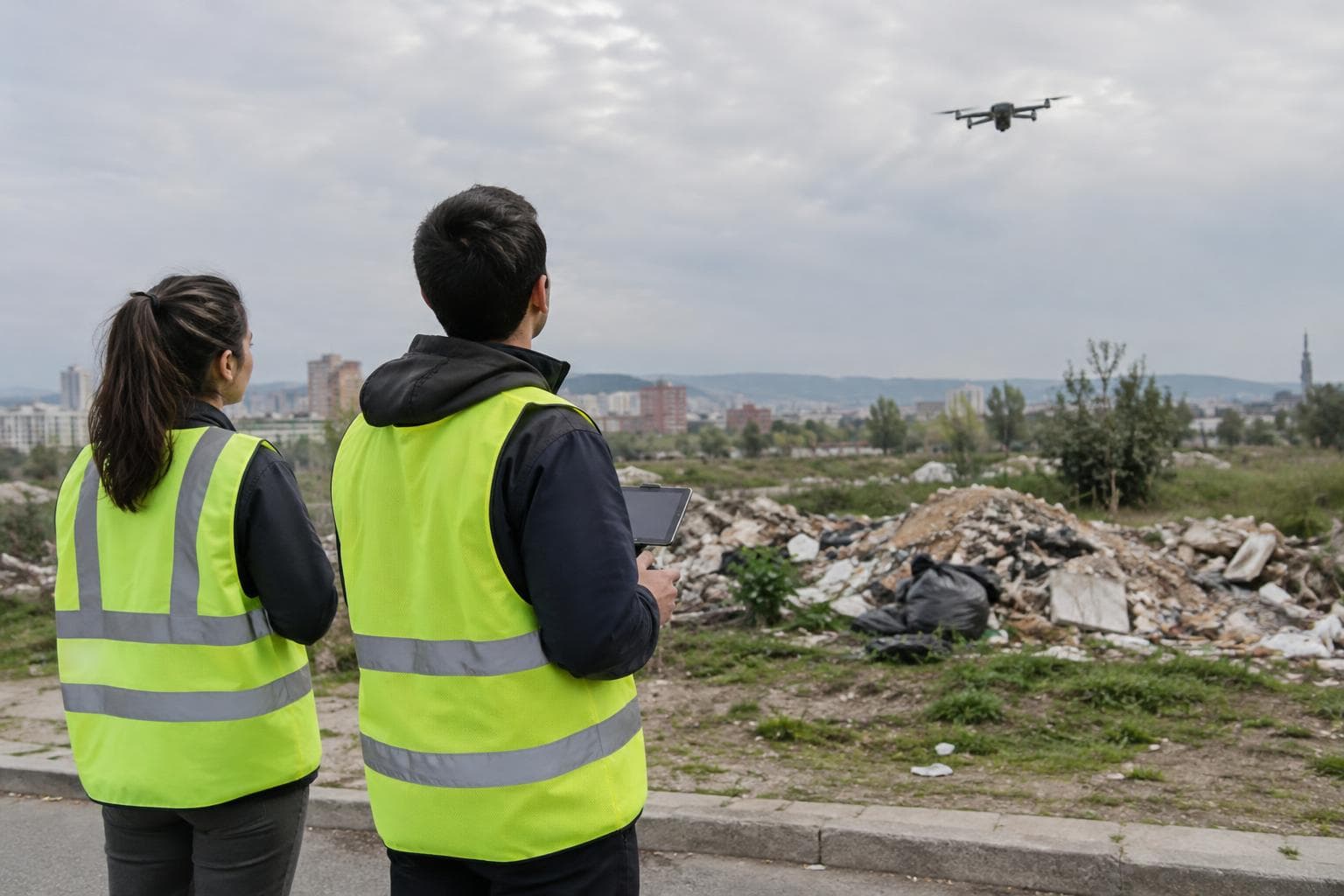
Córdoba City Hall said on October 21, 2026, that it had begun using drones to strengthen environmental enforcement against illegal waste dumping at dumping sites and small informal dumps across the city.
According to the official announcement, the tool is being handled by the city’s Administrative Misdemeanor Justice area and is in an initial phase of testing and technical adjustments. The stated goal is to expand territorial coverage, observe hard-to-access areas, detect emerging small dumping sites and track the evolution of critical locations.
The information gathered by drones will be integrated with the Urban Monitoring Center and municipal field teams. For residents, the change is not in everyday collection, but in how the city monitors irregular dumping in public spaces and urban edges where informal dumps often reappear.
The first reported cases
The city described two incidents detected on Thursday, October 15, on Bulevar De los Polacos at the 8500 block, near Alto Perú and across from Club Social y Deportivo Los Amigos Córdoba.
In the first case, at 11:30 a.m., a drone recorded two people unloading waste from a vehicle in a public area. According to the municipal report, the vehicle left before an intervention could take place and a digital citation was issued.
In the second incident, at 12:40 p.m., another vehicle was detected in the same area. The city said the drone’s speaker and sirens were used, police intervened, one person was apprehended and the vehicle was seized.
Possible fines and sanctions
The city recalled that Ordinance 12,468, article 219, establishes fines of 200 to 2,000 UEM for violations linked to waste dumping. In its October 21 statement, Córdoba translated that scale into amounts from AR$3,291,200 to AR$32,912,000, with the UEM valued at AR$16,456.
If a vehicle is used to transport the waste, the sanction may also include temporary disqualification or withdrawal of the driver’s license. The statement also says people receiving municipal assistance, such as subsidies, benefits or exemptions, could lose them after this type of violation.
The city added that the provincial Coexistence Code, Law 10,326, triples the maximum penalty when dumping is carried out with motor vehicles in public-use spaces. People involved retain the right to file a defense before the misdemeanor court.
A problem that predates the drones
The use of drones appears as an extension of controls Córdoba had already been carrying out through the Urban Monitoring Center and field operations against illegal dumping.
In January 2026, the city reported removing 2,192 tonnes of waste in six days from 78 dumping sites, including recurring areas such as Bulevar De los Polacos and Alto Perú. In another earlier report, the city said it had removed 1,162 tonnes in one week from large dumping sites, smaller dumps and canals.
That context explains why the announcement matters for neighborhood life: this is not only about a new technology, but about the everyday dispute over public space, urban cleanliness and the cost of repeatedly removing waste dumped outside the proper system.
Keep exploring
Córdoba City Hall — Aerial environmental enforcement: the city began using drones to monitor illegal waste dumping at dumping sites ↗Córdoba City Hall — More than 1,100 tonnes of waste were removed from dumping sites and canals in the last week ↗Córdoba City Hall — More than 2,000 tonnes of waste were removed from 78 dumping sites in recent days ↗Córdoba City Hall — Illegal dumping in public space: three people apprehended, AR$4 million fine and a pickup truck seized ↗Stories worth sharing.