A federal literature at the center of Buenos Aires
The second edition of the Salvaje Federal Festival takes place on November 14 and 15, a Saturday and a Sunday. The venue is the Asociación Patriótica y Cultural Española, on Bernardo de Irigoyen street, number 674, in Monserrat. Activities start at 2 pm and admission is free.
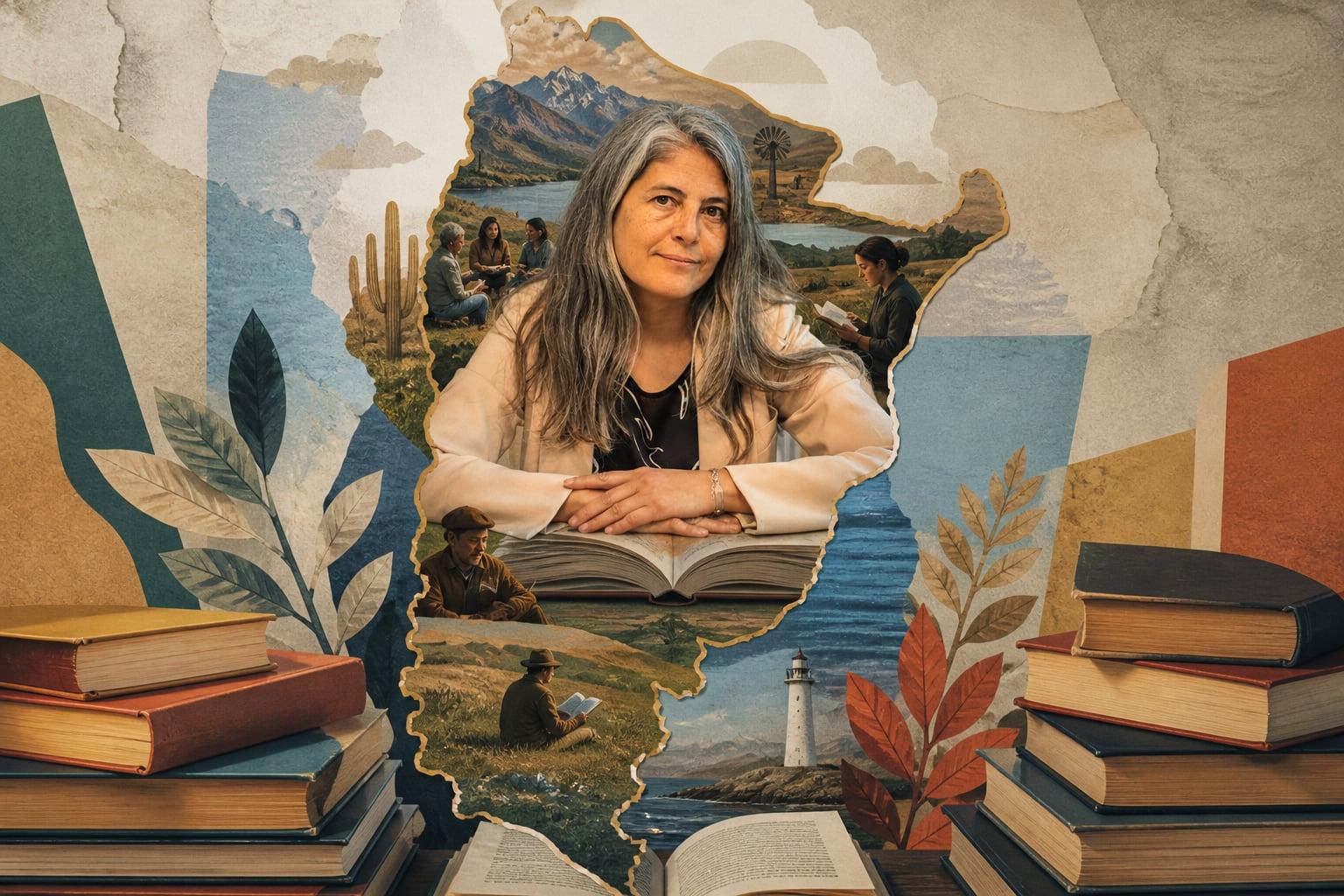
Writer Selva Almada, from Entre Ríos, directs and curates the gathering, which brings together 30 independent publishers and more than ten authors. According to Infobae, the idea is to show that the capital can be one more regional host, not the one that decides what counts as national literature.
Delegations come from Córdoba, La Pampa, San Luis, Tucumán and Buenos Aires province, along with the Autonomous City of Buenos Aires. The paradox is intentional: debating centralism in the place where much of literary legitimacy is concentrated. Almada summed it up for Infobae: “it is stimulating to bring the discussion of federal, decentralized literature to the center of the problem of centralism”.
From Rosario to Buenos Aires in two editions
Rosario was the festival's birthplace, in 2022, and the idea is for it to pass through different cities and provinces every year. Its first edition took place in Rosario and Casilda, with 20 authors and 30 publishing houses. This second time the organizing team also includes Natalia Peroni and Raquel Tejerina.
As Almada told Infobae, that experience taught the group to raise funds and to work with people outside the project. In Rosario the local organizers Dahiana Belfiori and Alejandra Méndez were key, and they also helped with the curation.
Putting together a festival of this size is not easy financially, the curator explained, which is why it was designed as shared management between public and private bodies. Backers of this edition include the Centro Cultural de España en Buenos Aires, Banco Hipotecario and the university press EDUNT, of the Universidad Nacional de Tucumán.
Who takes part and what is discussed
The program brings together writers of several generations. Among those confirmed are Dolores Reyes, Luciana De Luca, Marie Gouiric and María Belgrano, as well as Sergio Raimondi, a native of Bahía Blanca, and Roberto Chuit Roganovich. From La Pampa come Maité Lluch and Ángeles Alemandi, from Córdoba Alejo Carbonell, Fabio Martínez and Elena Anníbali, from San Luis Patricio Torne and from Tucumán Inés Aráoz.
There are three lines of work: language in relation to territory, writing and memory, and the circulation of books and authors. One panel asks what a truly federal Argentine literature would look like, one not limited to what is written and published around the River Plate. Another looks at how language is used depending on where it is spoken.
Saturday closes with music: Juan “Tata” Cedrón will offer a homage to the criolla song with his repertoire.
The book fair and the open workshops
For Almada, one of the pillars of the festival is the fair. There will be 30 publishers from the Pampas region, with a stand on both days. The curator noted that many independent publisher fairs already take place in the city during the year and that a regular audience will probably come along.
The same Saturday, before the start, two free workshops will be held with prior registration, from 10:30 am to noon. Ángeles Alemandi leads one devoted to Pampas poet Juan Carlos Bustriazo Ortíz, at the Residencia de Artistas Australia, in Barracas. Fabio Martínez runs the other, on creative writing, at the Biblioteca Parque de la Estación, in Balvanera.
One of the most persistent obstacles for small publishers is that their books do not travel far from where they are published. The fair targets exactly that: so that readers in Buenos Aires can find authors who rarely visit the city, among them Tucumán poet Inés Aráoz, and publishers whose books do not reach the capital's bookshops.
If you go
Dates: Saturday, November 14, and Sunday, November 15, from 2 pm. Venue: the Asociación Patriótica y Cultural Española, Bernardo de Irigoyen street 674, in the Monserrat neighborhood. All activities are free of charge.
The two Saturday workshops, from 10:30 am to noon, require prior registration: the one on Bustriazo Ortíz is held in Barracas and the creative writing one in Balvanera. The fair with 30 independent publishers runs on both days.
Source: Infobae
Keep exploring
El Festival Salvaje Federal llevará la discusión sobre el centralismo literario al corazón de Buenos Aires ↗Stories worth sharing.