Malba completes the hang of its collection
Malba, the Buenos Aires museum devoted to the art of the region, opened a new room that completes the renewal of its permanent collection, Clarín reported. The museum built a new curatorial script as part of its 25th anniversary, and its home in Barrio Parque now adds the second part of the tour.
The first part opened in May. In September, the museum had celebrated its anniversary with the opening of the exhibition Viva Frida. The new room touches on abstraction in the region, but also on armed conflicts, exile and what the dictatorships left behind.
The curatorial project is called Latinoamérica en expansión and is signed by Nancy Rojas, Alejandra Aguado and Marita García. It brings together many classic Malba works and adds pieces from the Daros Collection, which Eduardo Costantini bought and which joined the museum last December.
Names arriving for the first time
With the Daros works, Malba's collection adds Doris Salcedo, Jesús Rafael Soto and Carlos Cruz-Diez for the first time. According to Clarín, new formats by Lygia Clark also appear.
Among the recent acquisitions, Ocinaico, by María Martorell, is shown for the first time since the museum bought it in 2025. The work turns its gaze to color and its contrasts.
From abstraction to conceptualism
The tour starts with abstraction, a key genre for the region in the 20th century. César Paternosto and Alejandro Puente work on it through space and leave the easel format so that viewers move in front of the work. Eduardo Terrazas, with colored threads, recovers ancestral traditions.
Antonio Dias presents monochrome works and Nelson Leirner pays homage to Lucio Fontana with humor. Instead of the cuts the Italian-Argentine artist made, Leirner puts zippers across the canvas.
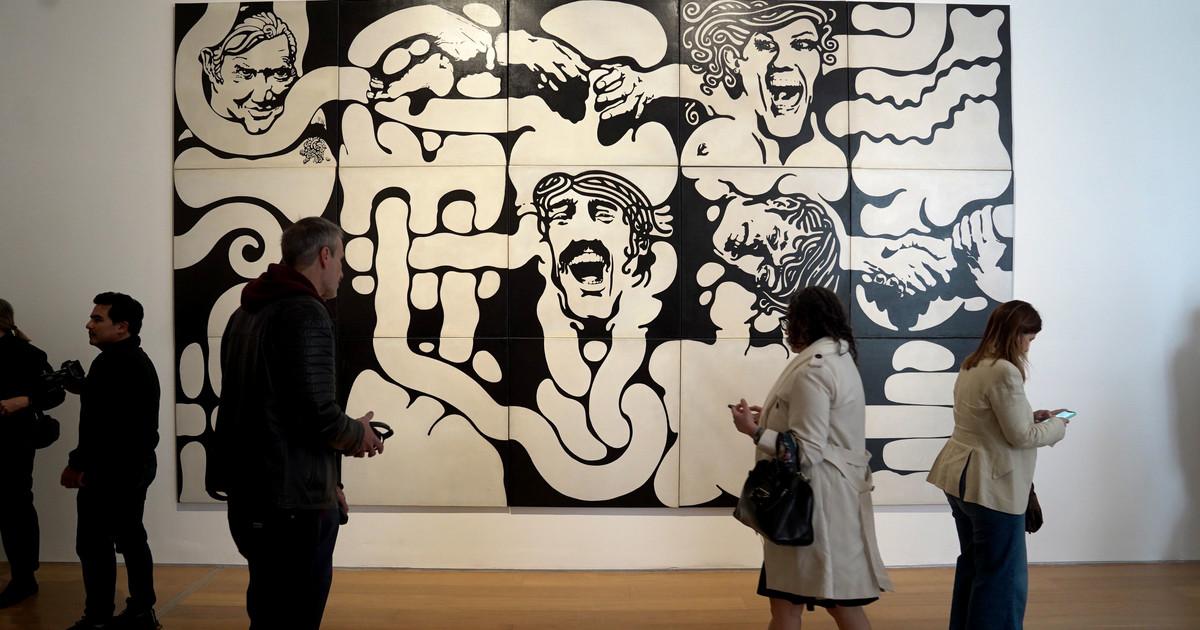
Further on comes the figuration of the 1960s, with pieces that fragment the figure and that were the heart of the collection. Rompecabezas, by Jorge de la Vega, is back at the museum, and nearby are two more classics: El viudo, by Fernando Botero, and La gran tentación, by Antonio Berni.
Conceptualists were emerging at the same time. Víctor Grippo worked with potatoes, cables and electrical connections, and Luis Fernando Benedit presented the Proyecto huevos. The curators describe it, according to Clarín, as “a conceptualism still rooted in materiality”. León Ferrari and Antonio Dias, for their part, add the geopolitical context in which they worked.
The last room reaches the 1990s
The final stretch gathers works up to the 1990s. Guillermo Kuitca, author of Afghanistan, another piece that comes from Daros, shows the moment when he moved from mattresses to maps. Next comes Destierro, by the Cuban artist Tania Bruguera: a life-size figure covered in mud, which recalls an African deity and which the artist took into a performance that traveled through Havana. The record of that action is shown next to the work.
The Chilean Eugenio Dittborn contributes works made from clippings of the newspaper El Mercurio, and the Colombian Doris Salcedo, her furniture. Nancy Rojas explained, according to Clarín, that these artists share concerns such as migration and exile for sociopolitical reasons, and that they take up themes of the modern artists, such as transatlantic slavery, in a Latin America crossed by conflicts and military dictatorships.
To understand the context
Malba is the Buenos Aires museum of Latin American art and its home is in Barrio Parque. This year it turns 25 since its founding. The Daros Collection, which Eduardo Costantini put together and which reached the museum last December, brings to the room names that were not in the collection before: Cruz-Diez, Salcedo and Soto.
The Latinoamérica en expansión script unfolds in two parts. The first opened in May and the second, with the new room, completes the hang. To find hours, tickets and visiting days, check the museum's official channels, because the source article does not report them.
Source: Clarín
Stories worth sharing.